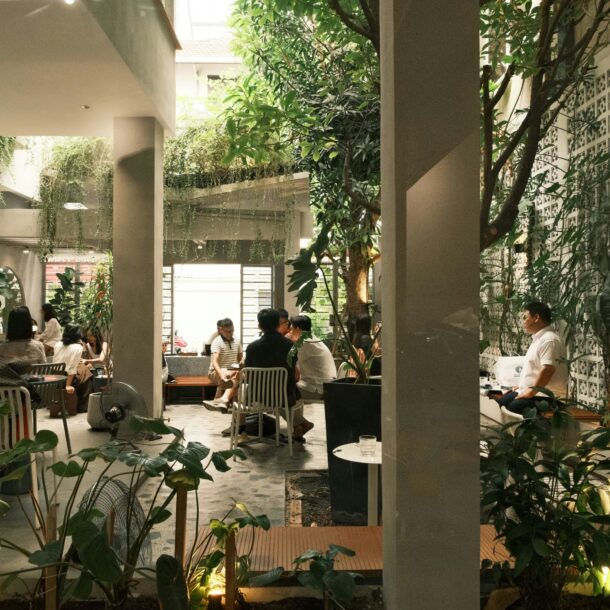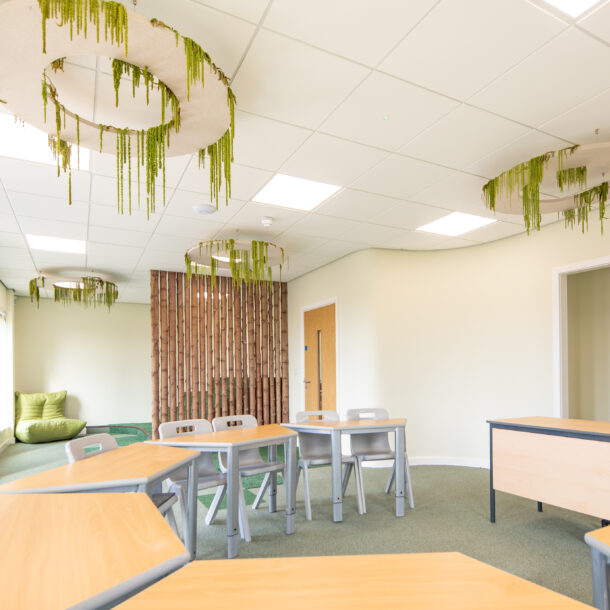

Hospitals are under pressure to improve outcomes while creating environments that support recovery, reduce stress and help staff deliver great care. Biophilic design brings people into closer contact with nature through views of nature, natural light, materials and spatial qualities all have a strong and growing evidence base showing benefits for patients, families and staff.
One of the most cited studies in healthcare design comes from environmental psychologist Roger Ulrich. In a controlled comparison of 46 post-operative patients, those whose rooms overlooked trees left hospital sooner, required fewer potent analgesics and received more positive nursing notes than matched patients facing a brick wall. This work, published in Science, helped establish a measurable link between contact with nature and recovery.
Contemporary reviews that synthesise multiple studies reinforce these findings. A 2024 systematic review across 2010 to 2023 reports that biophilic strategies in hospitals are associated with reduced hospitalisation time, lower mortality and pain and reduced stress for staff, alongside improved experiences for patients and families.
Another peer reviewed synthesis proposes a healthcare specific biophilic framework informed by hospital user (patient and staff) experiences, underscoring the importance of tailoring nature based interventions to clinical functions and local context.
The UK’s NHS design guidance explicitly frames hospitals as therapeutic environments, advising teams to maximise natural daylight, provide views of landscape and sky and ensure bedrooms and communal areas overlook appealing outdoor space all central to biophilic design. These directives appear across general design guidance and specialty notes, signalling policy level support for nature positive environments.
In practice, the UK’s Maggie’s Centres which are non-clinical spaces on hospital campuses for people with cancer offer a well-documented model. Research synthesising user experiences links their nature led architecture to reduced stress, improved mood and a sense of agency and social connection which are factors known to support recovery.
Singapore’s Khoo Teck Puat Hospital integrates gardens, water and views throughout the campus. Post occupancy assessments and national patient satisfaction surveys consistently rank it highly, with biophilic qualities cited as contributors to the overall experience and perceived wellbeing. While many outcomes are experiential rather than clinical metrics, they align with the wider literature on stress reduction and comfort.
Biophilic design isn’t just about adding plants. Evidence points to several mechanisms relevant to recovery:
Limitations and research needs
Not all studies measure the same outcomes, and some evidence relies on experiential and satisfaction metrics rather than hard clinical endpoints. Causality can be difficult to isolate in complex healthcare settings. Nevertheless, converging findings across decades from controlled studies to modern systematic reviews and national guidance, strongly support incorporating biophilic strategies as part of an evidence based approach to healing environments.
Selected references (some are not open access)