Biophilic Design, Creative Direction, Architectural Design, Technical Strategy, Site Development, Specialist Construction Services, Bespoke Interior and Exterior assets.
Categories
Education, Biophilic Design, Landscape
Biophilic School Design Supporting SEND and Neurodivergent Learners
A former disused youth centre in South Yorkshire has been transformed into a purpose led, biophilic school designed to support pupils aged 11-16with communication and interaction needs. This specialist educational environment demonstrates how thoughtful, evidence based design can positively impact wellbeing, behaviour, and learning outcomes for neurodivergent pupils.
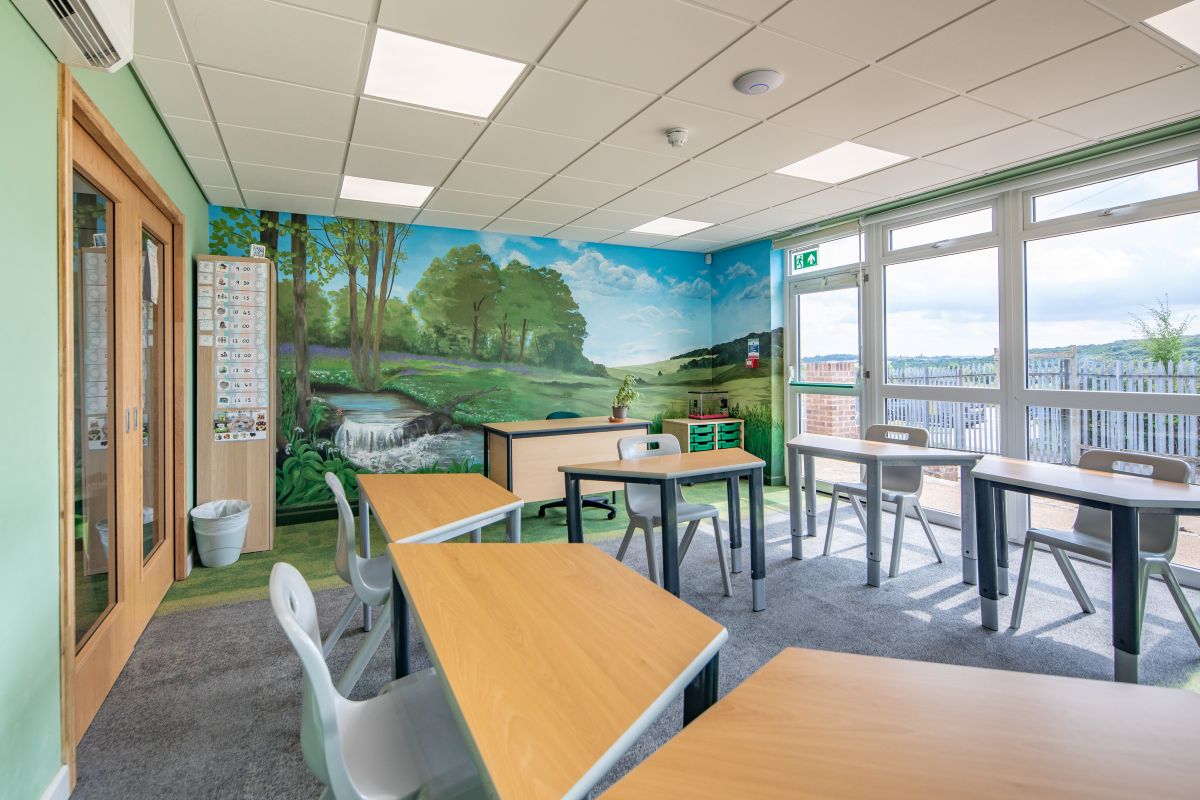
Developed using biophilic design principles, the project prioritised natural light, sensory regulation, and emotional safety which are key considerations for SEND schools, alternative provision settings, and local authority led education projects. Additional windows and rooflights were introduced to maximise daylight and improve circadian rhythm regulation. The results have been significant, with several pupils no longer requiring melatonin to support sleep, therefore highlighting the direct link between environmental design and physiological wellbeing.
Creating Calm, Regulated Learning Environments
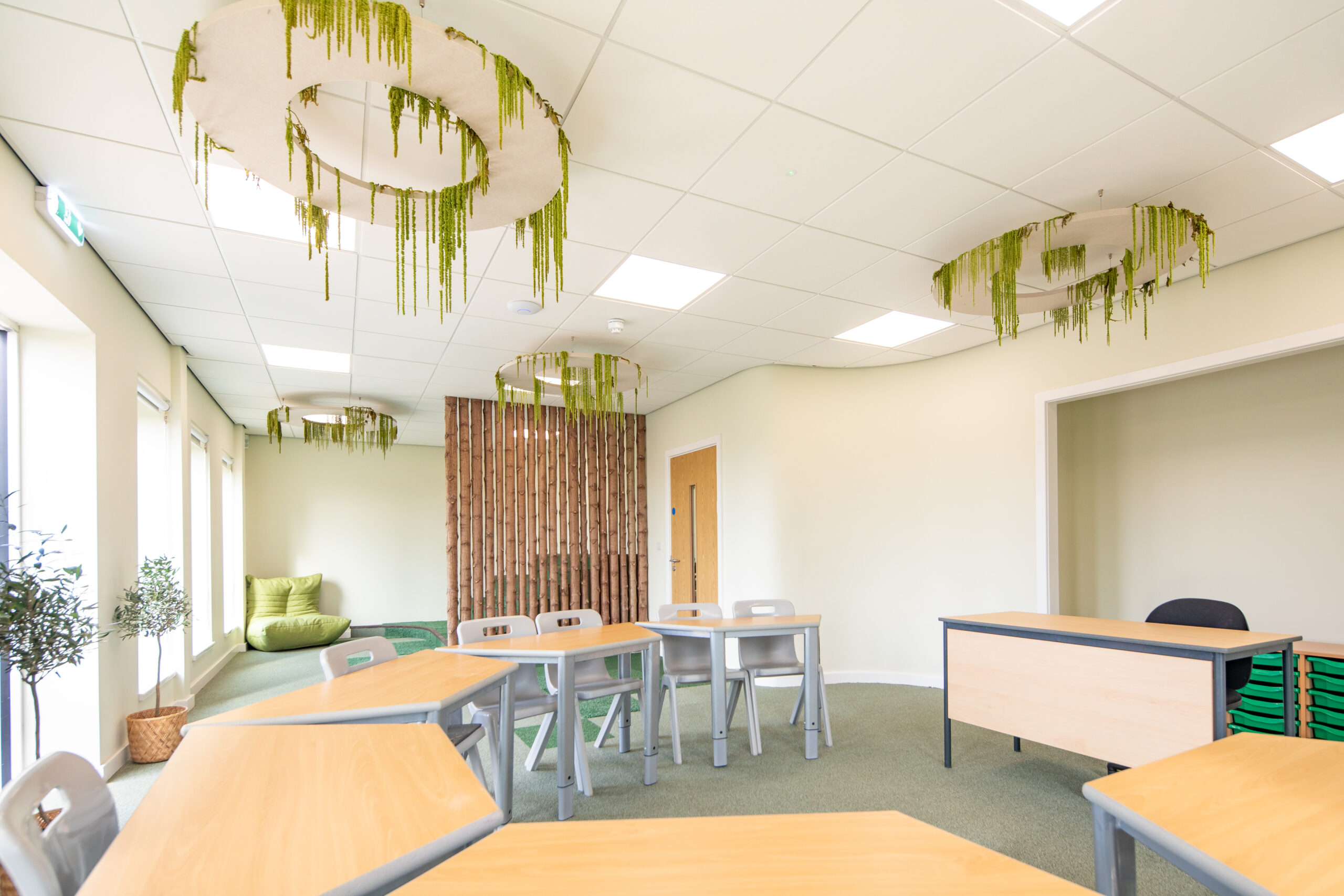
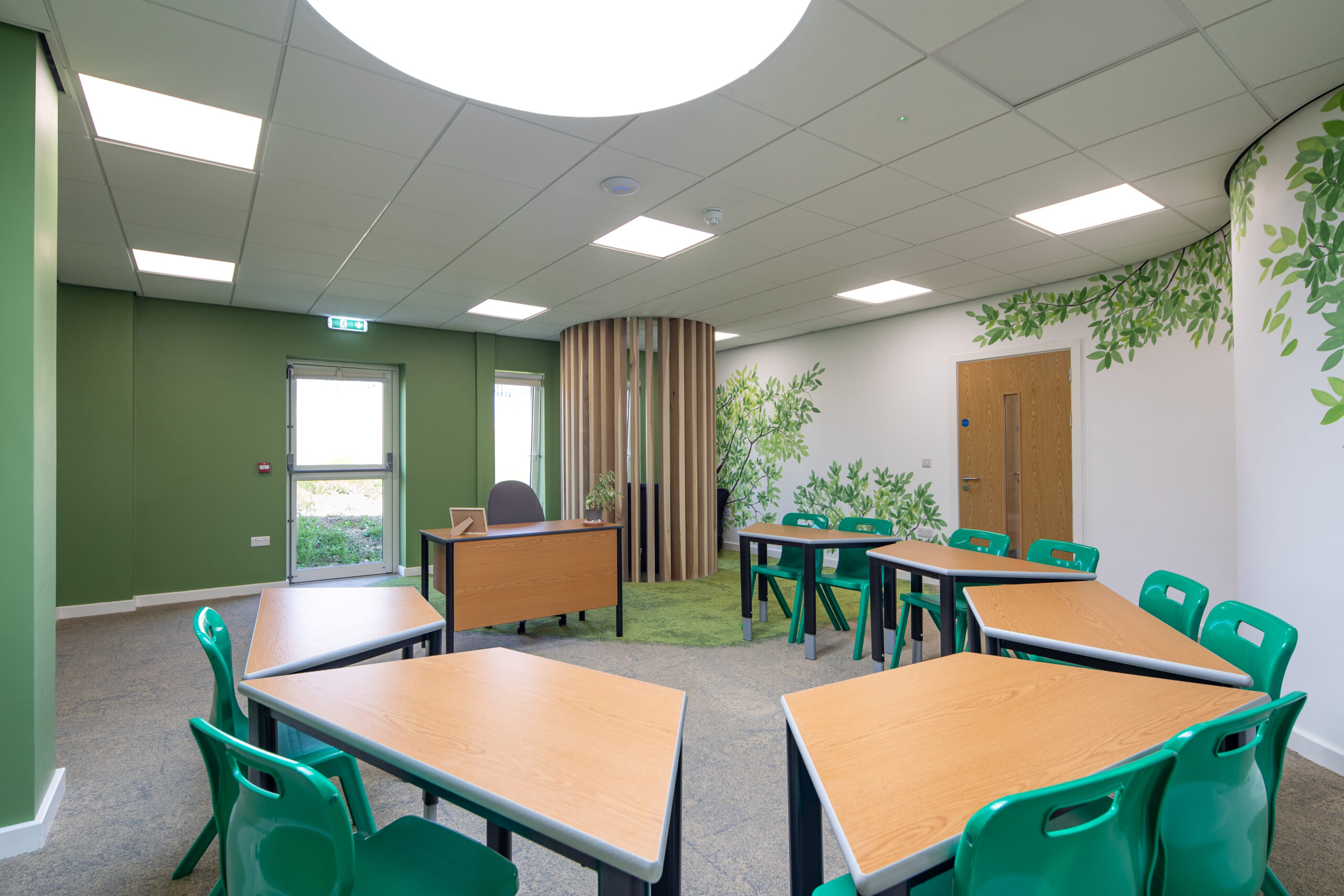
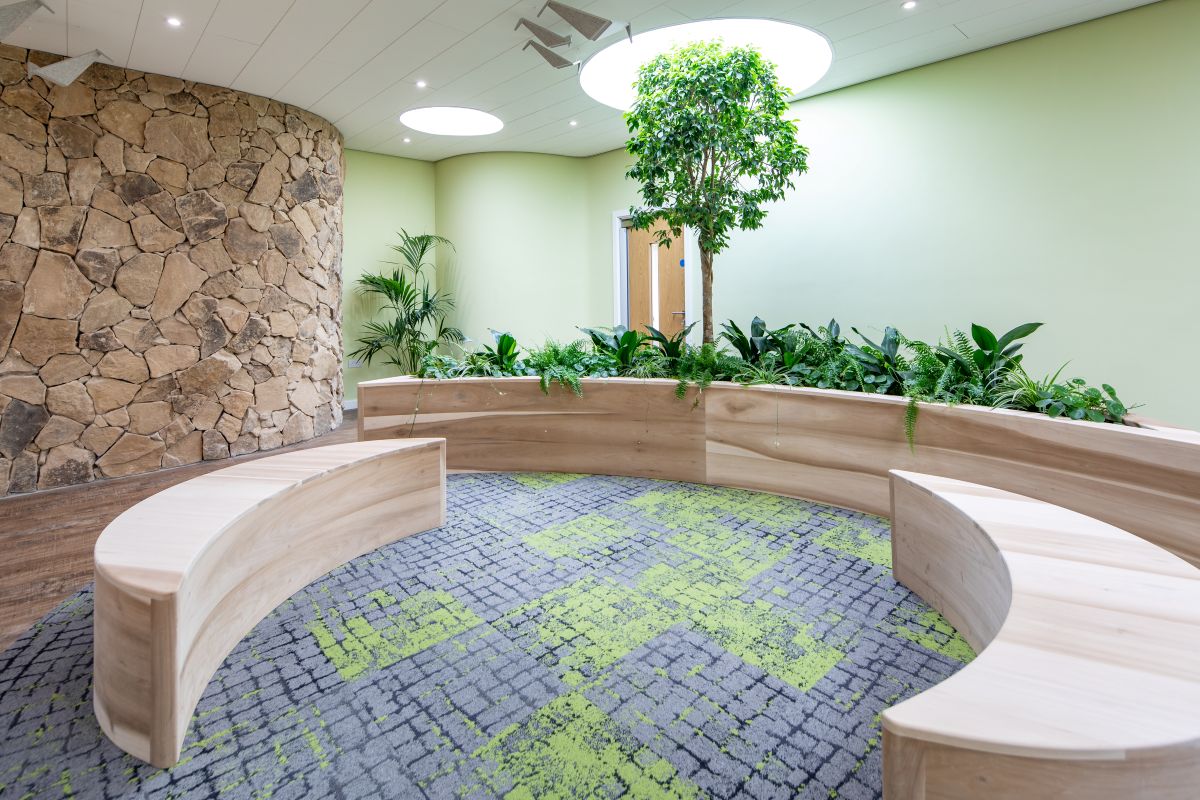
Internally, the school incorporates a range of bespoke natural features carefully designed to reduce sensory overload while promoting focus and engagement. These include tree trunk dividers, organic reading nooks, integrated acoustic treatments, and a living wall that brings nature directly into the learning space. Gentle essential oil diffusion supports emotional regulation, helping to reduce anxiety and encourage creativity without overwhelming the senses.
Each element was selected to meet the complex needs of SEND learners, aligning with best practice guidance for inclusive education environments and trauma informed design. The result is a calm, uncluttered setting that supports both individual regulation and structured learning
Measurable Impact for Pupils, Staff, and Families
The impact of the transformation has been widely felt across the school community. Pupils report feeling calmer, safer, and better able to concentrate. Teachers have observed improved behaviour, reduced environmental stressors, and the powerful effect of natural light and views to the outdoors on engagement and learning.
Parents have described the school as serene and sensory considerate, noting a clear improvement in their children’s confidence, emotional wellbeing, and ability to thrive in an educational setting. For local authorities and academy trusts, the project demonstrates how investment in well designed SEND environments can lead to meaningful, long-term outcomes.
A Model for Future SEND and Specialist Education Projects
Phase Two of the project increased capacity and introduced further biophilic innovations, this school is emerging as a benchmark for SEND school design in the UK. It illustrates how carefully considered architecture can support inclusion, wellbeing, and educational attainment while creating spaces that work effectively for pupils and staff alike.
For schools, local authorities, and trusts seeking to improve existing buildings or develop new specialist provision, this project highlights the transformative potential of biophilic, human centred design when delivered with balance, care, and expertise.
“Study nature, love nature, stay close to nature. It will never fail you”